Practicing English listening with short stories: understand, then retell
Distinguish listening to follow a story from focused listening to practice a particular skill.

Choose a story you can still follow
An accessible story helps you keep your attention on the content. You do not need to understand every word, but you should know who is doing what and what changes after each passage. If you have to stop constantly just to guess meanings, choose something shorter, more familiar or more clearly paced. The right level lets you keep listening with curiosity.
Before starting, set a small question: what does the character want, where is the problem, or how does the story end? Listen for the answer. This gives you a more specific goal than “try to get better at listening.” For beginners, a short dialogue can also make a good exercise; a long story is not necessary.
Separate listening for the main idea from close listening
On your first pass, try not to stop and look up every word. Afterwards, summarize the main idea in Vietnamese or simple English. On the second pass, choose one part you missed and check the transcript. The problem may be a new word, or a word you know but did not recognize as pronounced in the sentence.
Work on just a few points in each session. Write down a sentence you want to learn, mark what you misheard and listen again. If a translation is available, use it to check meaning after trying to understand first. Keeping the translation open throughout can turn the activity mainly into reading Vietnamese, so try short stretches of audio alone.
Listen to a passage, check one idea
Practice repeating after you understand the sentence
Speaking along with a recording, often called shadowing, combines listening and pronunciation practice. You can begin more gently by listening to a sentence, pausing and repeating it. Once comfortable, try following with a short delay. Do not force the pace if it makes you omit sounds or stop understanding what you are saying.
Record a short passage yourself and choose just one thing to compare, such as stress or pauses. Focus on that in the next attempt. Synthetic speech can be convenient for listening practice, but its phrasing or pronunciation of names may sometimes sound unnatural. Listen to real people with varied ways of speaking too, rather than treating a single recording as the only standard.
Track understanding instead of playback minutes
You can spend one session on a new story and another revisiting an old one. After each session, write one sentence about the content and one thing that remains unclear. At the end of the week, try retelling a story without opening the transcript. Listening again is not a failure; it gives you a chance to notice details you missed.
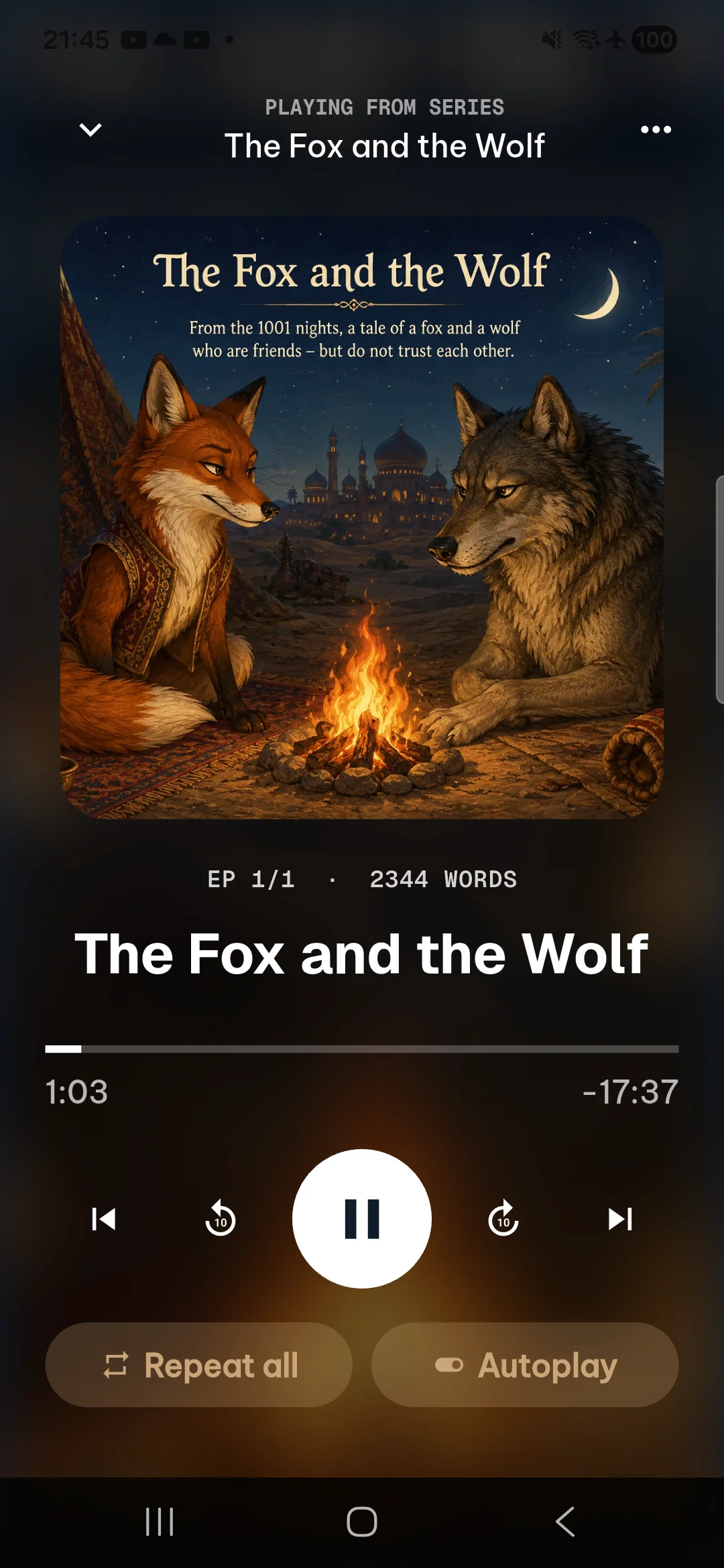
The audio story library in SnapWord VIRL is one option for practice. Whatever app you use, choose material at your level, check unclear passages and leave time to retell what you heard. Listening while doing something else can be convenient, but focused sessions are also needed if you want to understand where you are improving.
References
- Paul Nation — Language learning and teaching resources ↗
Further reading on combining listening, reading and language practice.

SnapWord VIRL
Learn from the world around you
Turn everyday photos into vocabulary lessons, practice listening with audio stories and revisit words you have encountered in familiar situations.
Frequently asked questions
Is listening while doing housework useful?
You can use that time to revisit familiar material. For new or difficult passages, set aside some focused listening time to check your understanding. Minutes of background playback do not fully reflect the quality of a study session.
Do I need to copy an accent exactly?
No. Prioritize clear speech, sensible pauses and communicating your meaning. You can learn rhythm from a recording while keeping your own voice; you do not need to sound exactly like a particular person.
Related articles

Learning English through video: combining context and review
Video shows you the situations in which vocabulary is used. Combine watching, looking things up and recalling them yourself to turn viewing time into a focused learning session.

Spaced vocabulary review: understanding SM-2
Learn what SM-2 does, why you should answer before revealing the solution, and how to handle a growing backlog of review cards.

Learning vocabulary from everyday photos: start with what you see
A corner of your desk or a day out can become a small lesson. Learn how to choose photos, check object names and move from vocabulary labels to meaningful sentences.